The Boy Who Was Sent to the Back of the Class
By Richard Green, author of THE LUCKIEST DEAD MAN ALIVE
What happens when a kid who struggles with spelling is told he isn't good enough, and no one sees the real kid behind those mistakes?
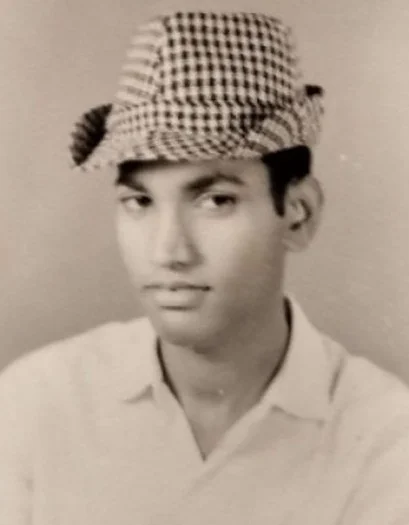
I was that kid. Actually, I'm still that kid, to be honest with you.
In Birmingham, during the 1960s and 70s, school wasn't really one of my better experiences.
While other kids were busy with their reading, writing, and arithmetic, I was usually staring out the classroom window, thinking about all sorts of things instead of what I was meant to be learning.
I wasn't stupid; I was bored. In my head, I had a hundred and one things going on: stories, music, playing; my imagination never seemed to take a break, and it got me into trouble.
My school reports were full of comments about my concentration, spelling, handwriting, and my trouble sitting still and paying attention.
And the solution? Put him at the back of the class. That'll sort him out.
School in Britain in the 1970s had chalkboards, wooden desks, exercise books, strict teachers, corporal punishment, and the odd blackboard rubber being thrown at you.
People rarely talked about different learning styles, neurodiversity, or why some kids found it hard to concentrate.
No one, and I mean no one, had even heard of ADHD; well, it was never mentioned in my classroom.
You were either bright, average, or one of those kids who couldn't keep up. And if you couldn't keep up, you would most probably end up sitting in the back. I got rather acquainted with that part of the classroom. (Listen to me... Mr La Di Da with his big words)
My spelling was terrible, my grammar was just as bad, and I treated punctuation like it was optional. I just put pen to paper and tried to get what was in my head onto the blank page as quickly as I could. In my head, if I didn't write it down quickly, it would be gone, so I was made to write lines because I couldn't write properly, and fifty years later, I became a bestselling author.
None of those teachers tapped into what I could do; they always focused on what I couldn't.
My imagination raced to the finish line while my schoolwork lagged behind.
The problem wasn't that I had nothing to offer. It was that no one knew where to look.
As I got older, music became my means of escape. That's when David Bowie appeared.
And all of a sudden, being different didn't seem like such a bad thing.
Here was someone telling the world that it was perfectly fine not to fit in.
It's possible that you are unusual and creative, and that you can reinvent yourself.
You didn't need to be just like everyone else.
It was a big surprise for a working-class kid from Birmingham who often felt a bit like an outsider in school. Bowie was the background music to my life.
I began writing songs, setting up bands, and pursuing dreams, even though the sensible ones knew they'd never come true. But some nearly did, and the others collapsed spectacularly.
Believe me, I've had so many Bollockalina! moments, it would take another book to fit them all in.
The only thing that nobody could take from me was my imagination.
The Day Everything Changed
I was running the New York City Marathon on 1 November 2009 many years later.
What happened that day had a permanent impact on my life.
I was pronounced dead and would never make it home.
Although I lived, the person who returned from New York was not the same person who had gone there.
That remarkable experience ultimately formed the core of my memoir, THE LUCKIEST DEAD MAN ALIVE.
The book isn't just about dying and surviving. It's about living.
This is about growing up, making mistakes, chasing dreams, finding humour in the craziest situations, and realising that sometimes our greatest strengths are the very things other people once regarded as our weaknesses.
From the Back of the Class to Bestseller
Can you imagine if one of my former teachers were told that the lad who couldn't spell, couldn't concentrate and who spent half his school life writing lines would someday write a book? And published it. (Even I'm shocked.) I think they would have raised their eyebrows.
Of course, I couldn't have done it without spellchecker. The fact that someone can spell doesn't mean they have a wonderful story to spell out.
Grammar can always be corrected.
The single message I want people to take from both my book and my life is this: do not lose hope in yourself. People don't all learn the same way. People don't all reach their talents at the same age. It isn't true that everyone's strengths can be assessed by a written examination. Some kids have a great talent for figures. Others are excellent at using words. People can build things, make others laugh, create music, draw pictures, or solve problems. I wish that someone had told me, "Richard, you may have difficulty with some things, but there's something special happening inside that head of yours; don't let it all go."
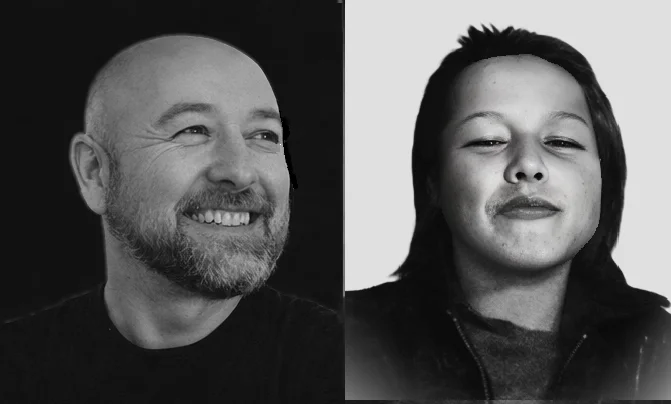
I am still the small boy who has a lot of ideas in his head. The only difference now is that rather than being asked to stop daydreaming, I am given the opportunity to turn my daydreams into stories. So if you're having trouble, if someone has given up on you, or if you've always thought you're not good enough, remember this: The future is not determined by your past. The errors you make do not determine your capabilities. The fact that something is different does not mean that it is less. (Put David Bowie's Changes on your playlist.) Keep on dreaming.
Richard Green, who was born in Birmingham, is an author, songwriter and the creator of THE LUCKIEST DEAD MAN ALIVE, a memoir that is one of the best-selling books on Amazon and which is about childhood, music, survival, second chances and finding purpose in the most unexpected places. It is about childhood, music, survival, second chances, and finding purpose in the most unexpected places.